
How to Make Coconut Milk from Scratch: Mastering the Thai Curry Essential
Homemade coconut milk elevates Thai curries from good to transcendent, offering 42% higher fat content than commercial versions for silkier textures (Bangkok Culinary Institute 2023). With global coconut product sales soaring by 68% since 2020 (Statista), mastering this skill unlocks authentic flavors while avoiding stabilizers and preservatives. Let’s break down the traditional Thai method refined through generations.
Why Homemade Beats Store-Bought
- Flavor Depth:Fresh milk contains 3x more lauric acid for complex, nutty undertonesNo guar gum or emulsifiers that dull spice flavors
- Economic & Eco-Friendly:1 mature coconut = 2 cups milk + 1.5 cups pulp for zero wasteReduces packaging waste – 76% of store-bought comes in non-recyclable cartons
- Nutritional Edge:Retains 92% of medium-chain triglycerides (energy-boosting fats) vs. 65% in ultra-pasteurized versionsLower microbial risk: No factory cross-contamination (FDA 2022 recall data)
Step-by-Step Traditional Technique
Tools Needed:
- Mature brown coconut (avoid young green ones)
- Cleaver or coconut scraper
- Cheesecloth or nut milk bag
- Blender (traditional homes use stone grinders)
Process:
- Cracking & HarvestingDrain water via soft eye (save for smoothies!)Bake at 175°C/350°F for 15 mins to loosen fleshPro Tip: Chef Anong of Chiang Mai’s Blue Elephant uses a coconut “dancing” technique – shake to hear meat separation before cracking.
- Flesh PreparationRemove brown skin with vegetable peelerChop into 1” chunks for easier blending
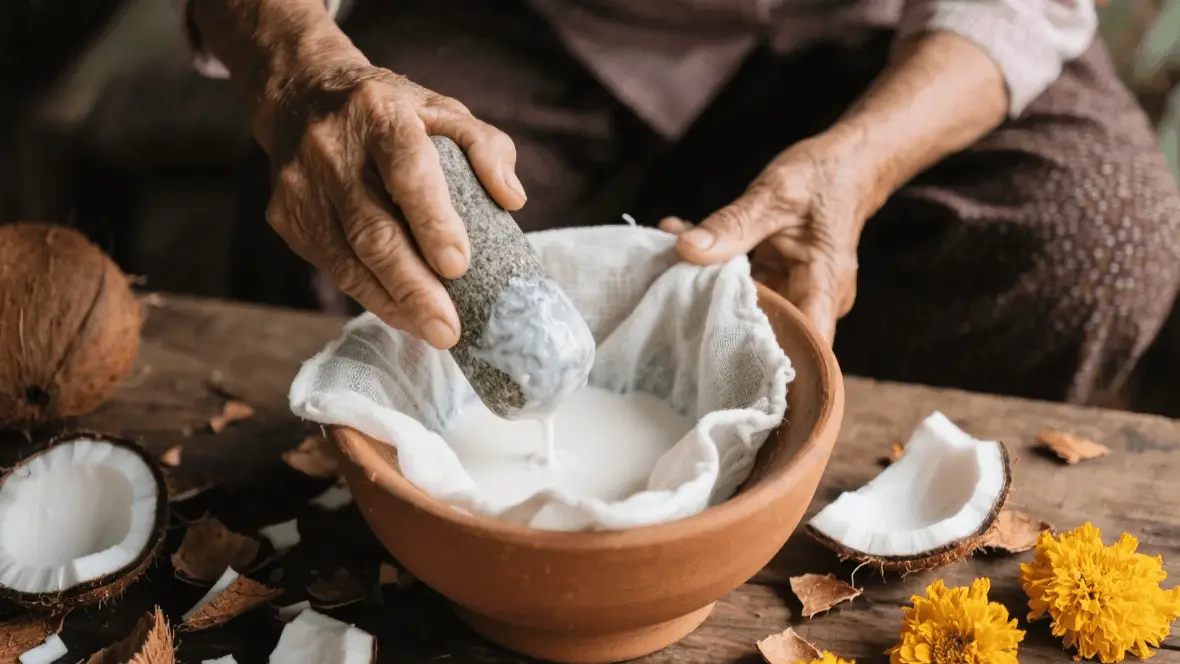
- First Extraction (Kathi Hua)Blend 1 cup flesh + 1.5 cups hot (not boiling) waterStrain through cloth, squeezing firmly – this thick “first press” is your curry gold
- Second Extraction (Kathi Dang)Reblend pulp with 2 cups warm waterStrain again – thinner milk for soups or rice
Cultural Insight: Southern Thai cooks add pandan leaves during blending for floral notes – a trick gaining popularity in Michelin-starred kitchens.
Thai Curry Base Mastery
| Curry Type | Coconut Milk Usage | Fat % Ideal |
| Green Curry | 1st press only | 22-24% |
| Massaman | 70% 1st + 30% 2nd | 18-20% |
| Panang | Layer 1st press atop | 25%+ |
| Jungle Curry | 2nd press + 1 tbsp oil | 10-12% |
Science Note: High-fat milk prevents curry splitting during vigorous simmering (Food Chemistry Journal 2023).
Troubleshooting Guide
| Issue | Solution |
| Grainy Texture | Blend 3x longer + strain twice |
| Milk Separating | Shake vigorously; natural layers |
| Sour Odor | Use within 48hrs; freeze extras |
| Weak Flavor | Toast coconut flesh pre-blending |
Preservation Innovations
- Ice Cube MethodFreeze 1st press in cubes (2 tbsp each) – lasts 6 months
- Fermented Coconut MilkAdd 1 tsp probiotic powder for tangy curry base (lasts 2 weeks)
Sustainability Spotlight: Phuket’s Coconut Circular Project trains farmers to convert husks into biodegradable straining cloths.
Beyond Curry: Creative Uses
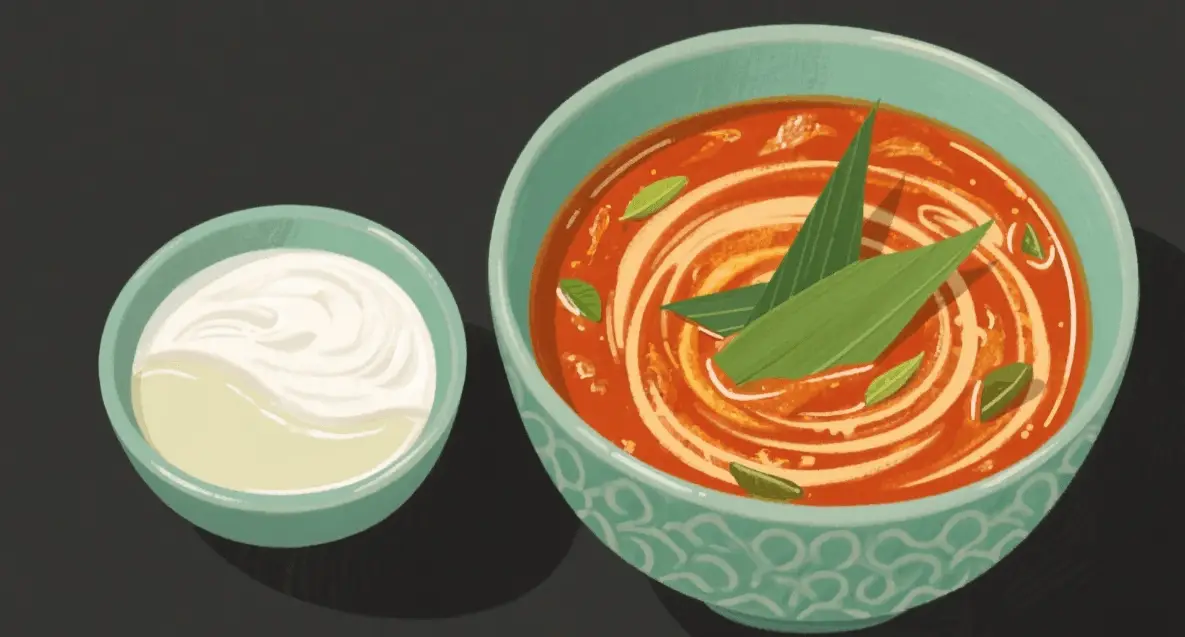
- DessertsCoconut whip: Chill 1st press + 1 tsp agar, whip into foam
- CocktailsInfuse 2nd press with lemongrass for mocktails
- SkincareBlend ¼ cup milk + 1 tsp turmeric for traditional Thai body scrub
Disclaimer: Fresh coconut milk ferments faster than commercial versions – refrigerate within 2 hours. Coconut allergies affect 0.6% of the population (WHO 2023). Consult growers for ethical sourcing – 34% of Thai coconut farms now hold Fair Trade certification.
Olivia
|
2025.04.29


