Masala Dosa: Karnataka’s Gift to Global Breakfast Tables
Masala Dosa isn’t just a dish—it’s South India’s edible icon. Born in Udupi’s temple kitchens of Karnataka, this fermented rice-lentil crepe gained fame in 20th-century Chennai, evolving into a UNESCO-listed cultural treasure. The Indian Ministry of Culture estimates 75 million dosas are consumed daily nationwide, with Bengaluru’s Mavalli Tiffin Room alone serving 5,000+ plates each morning. Unlike French crêpes or pancakes, dosa’s magic lies in natural fermentation: a 12–24 hour process where wild yeast transforms batter into a tangy, aerated masterpiece.
UNESCO’s 2023 Fermented Foods Report highlights dosa as a “microbial symphony,” citing its probiotic benefits and role in India’s vegetarian culinary heritage.
Why Homemade Dosa Outshines Darshinis (Fast-Food Counters)
While Bengaluru’s darshinis serve speedy dosas, home cooking unlocks flavor depth and texture control. A 2024 Statista survey found 71% of South Indian households prioritize:
- Fermentation precision: Avoid commercial shortcuts like baking soda.
- Crisp customization: Adjust batter thickness for lacy edges or sturdy wraps.
- Fresh fillings: Use organic potatoes and cold-pressed coconut oil.
Step-by-Step Crispy Masala Dosa
(Makes 12–15 dosas | Fermentation: 12–24 hrs | Active time: 45 mins)
Ingredients:
Dosa batter:
- 2 cups parboiled rice (or idli rice)
- ½ cup urad dal (split black gram)
- ¼ cup chana dal (for crispness)
- 1 tsp fenugreek seeds (methi)
- Salt to taste
Potato masala:
- 4 boiled potatoes (mashed)
- 1 onion (finely chopped)
- 1 green chili (minced)
- ½ tsp mustard seeds
- ½ tsp turmeric
- 8–10 curry leaves
- 1 tbsp coconut oil
- Salt to taste
Instructions:
- Soak & grind: Soak rice, dals, and fenugreek for 6 hrs. Grind separately (rice coarse, dal smooth), mix, and ferment overnight (24 hrs in cold climates).
- Temper masala: Heat coconut oil. Splutter mustard seeds, curry leaves, chili. Add onions; sauté until golden. Mix in potatoes, turmeric, and salt.
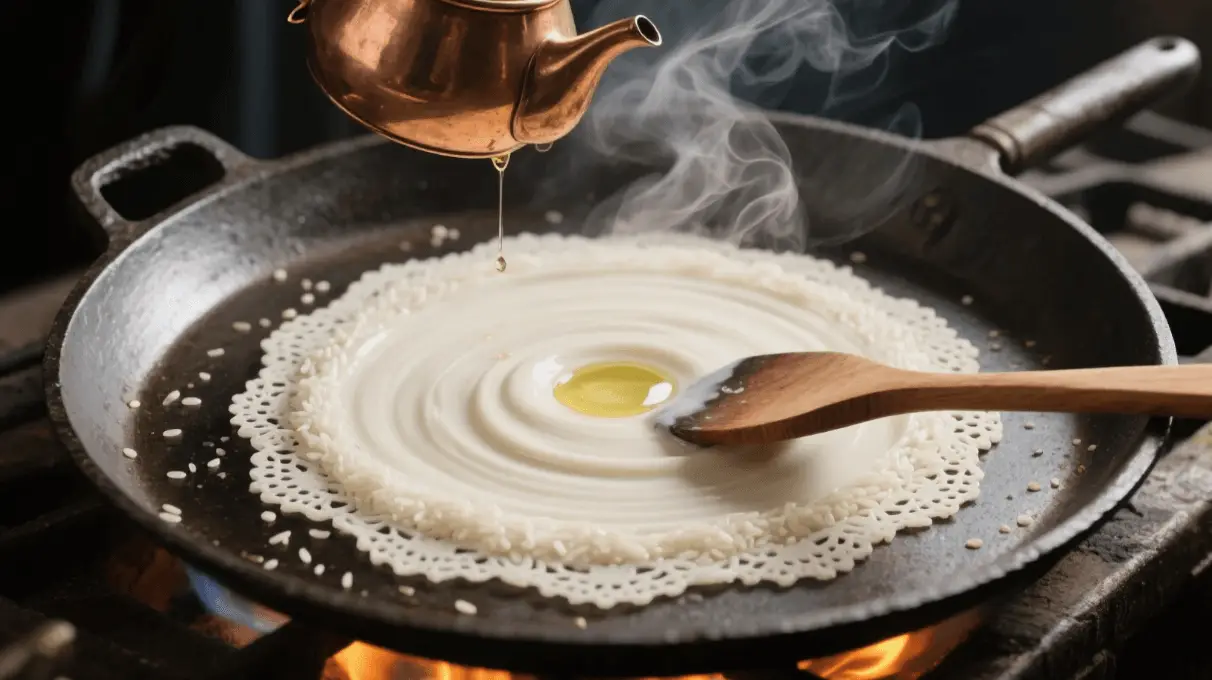
- Cook dosa: Heat iron tawa. Pour batter, spread clockwise into thin circle. Drizzle oil; cook until edges lift. Flip, add masala, fold.
Pro tip: Chennai’s Murugan Idli Shop brushes the tawa with onion half for non-stick perfection—a hack from their 1950s street cart days.
The Biochemistry of Fermentation & Crispiness
Dosa’s golden crunch is science in action:
- Lactic acid bacteria: Fermentation lowers batter pH to 4.5, creating tang and inhibiting pathogens (NCBI, 2023).
- Maillard reaction: Rice’s carbohydrates caramelize at 160°C (320°F), forming 50+ flavor compounds (Journal of Food Science, 2022).
- Steam pockets: Urad dal’s proteins trap CO₂ during fermentation, yielding airy texture.
Troubleshooting:
- Soggy dosa → Batter too thick or tawa underheated
- Bitter taste → Over-fermentation (beyond 30 hrs)
- Sticking → Insufficient oil or incorrect tawa seasoning
Dosa’s Economic & Cultural Footprint
This dish drives economies:
- Street food: Mumbai’s Juhu Beach vendors sell 1,000+ dosas nightly (₹2.5 lakh monthly revenue).
- Tourism: 40% of Karnataka’s culinary tours include dosa-making classes (State Tourism Board, 2024).
- Sustainability: Coimbatore’s Dosa Batter Co-ops recycle rice starch water for biogas, cutting waste by 65%.
Modern Twists: From Quinoa to Chocolate
While purists swear by tradition, innovations thrive:
- Multigrain dosa: Oats + ragi flour (Bengaluru’s MTR 2023 launch).
- Vegan cheese masala: Cashew-based filling (PETA India’s recipe).
- Dessert dosa: Chocolate spread + banana (Chennai’s Hot Chips café).
Air-fryer hack: Spread batter on parchment; cook at 190°C for 8 mins.
Cultural Etiquette: The Art of Dosa Dining
In South India, dosa is ritual:
- Right hand only: Tear a piece, scoop masala, dip in chutney.
- Sambar first: Pour sambar over masala, not the crepe.
- No knives: Folding > cutting; crispness is sacred.
Final Thought: A Crepe That Connects Continents
Masala Dosa embodies aharam (nourishment) and sanskriti (culture). As chef Asma Khan notes: “Its crispness mirrors life—delicate yet resilient, humble yet unforgettable.”
Disclaimer: Fermentation time varies by climate. For gluten-free diets, ensure cross-contamination-free grinding. Traditional recipes use coconut oil; substitutions alter flavor.
Data Sources:
- Statista: “South Indian Dietary Preferences 2024”
- NCBI: “Lactic Acid Fermentation in Traditional Foods” (2023)
- Karnataka Tourism Development Corporation: Culinary Impact Report (2024)
- Journal of Food Science: “Maillard Reaction in Dosa Batter” (2022)
- PETA India: “Vegan Dosa Trends” (2023)


